Larisa Sykes
Senior Program Property Manager, published author, and native Russian speaker credentialed at the highest ACTFL rating. She is accountable for asset records that have to survive an examination, and she works both sides of that discipline: the federal property regime, and the fixed asset, clinical, and institutional programs that answer to a different set of auditors.
The career
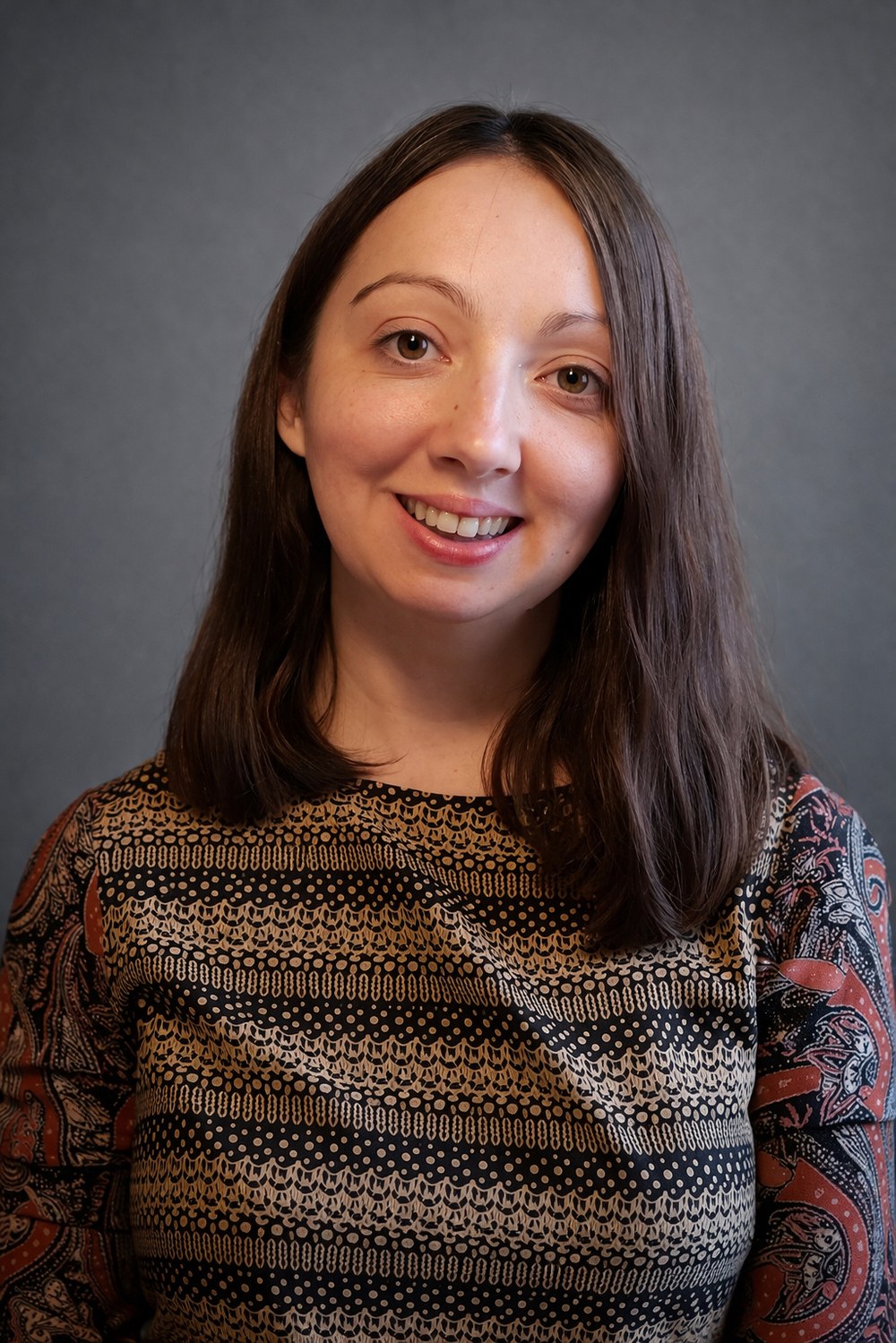
Larisa Sykes manages property the way an auditor reads a ledger, on the assumption that every entry will eventually be questioned. As a Senior Program Property Manager she has led international teams responsible for global asset records exceeding a billion dollars, owning the full arc of accountability from master data integrity through physical inventory to audit readiness across multiple programs and geographies.
A billion dollars in records is not a figure anyone manages by intuition. It is thousands of line items, each with a location, a condition, a custodian, and a history, any one of which can unravel an inventory when the underlying data drifts. Her chapters carry the texture of daily execution: the variance research and inventory counts that a policy document describes in one sentence and a property professional lives inside for weeks.
Seventeen years of that work took place under federal acquisition rules, at forward-deployed sites and industrial installations across five continents, where the consequence of a bad record is a contracting officer’s finding rather than a note in a quarterly review. She holds an active DOD Secret clearance.
Property here does not mean real estate
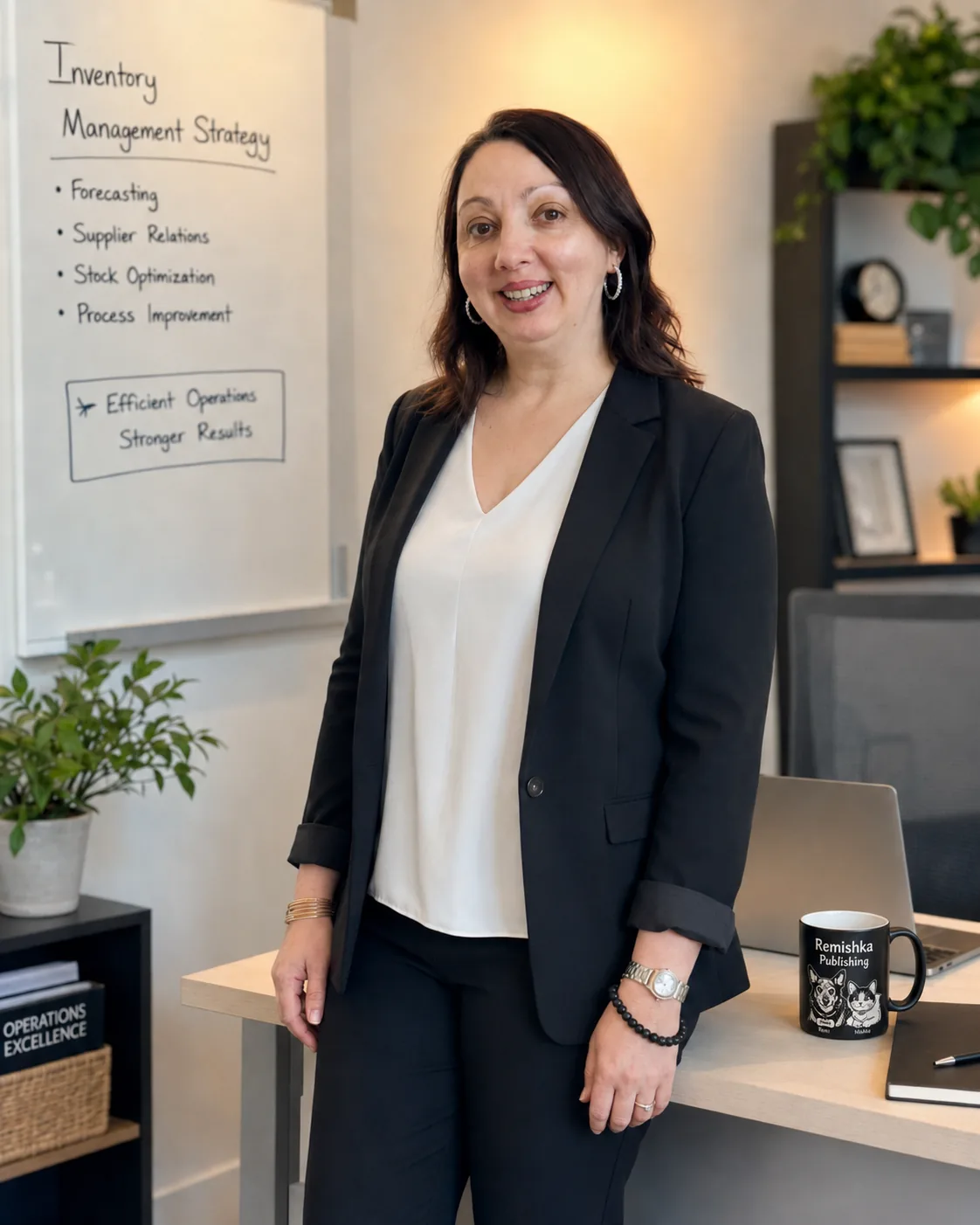
Outside government contracting, “property management” almost always means buildings and leases. That is a different profession. The work described on this page covers tangible items an organization owns, leases, or holds in custody: equipment, IT hardware, vehicles, tools, instruments, controlled inventory, and capital assets. Not the building they sit in.
Every sector runs this discipline under its own vocabulary.
| If your organization calls it | The people who own it |
|---|---|
| Government Property, Contractor-Acquired Property | Property Administrator, Property Manager |
| Fixed assets, capital equipment | Fixed Asset Manager, Controller |
| Clinical assets, biomedical equipment | Clinical Engineering, Asset Management |
| IT assets, configuration items | ITAM Lead, IT Operations |
| Technology assets, instructional equipment | Business Office, Facilities |
The regulatory drivers and the documentation volume change from one row to the next. The underlying workflow does not: acquire, record, tag, verify, document, dispose, and be able to prove all of it afterward. Larisa has run that workflow under the strictest version of the rules, which is why it transfers cleanly to the rest of them.
The work, by sector
Larisa’s specialty is the examination itself. Her recent work has centered on preparing contractor organizations for DCMA Property Management System Analyses, the reviews that decide whether a company’s property system is approved to hold Government Property at all. That work rewards a particular discipline: records that reconcile with practice, and the composure to defend them in front of someone paid to find the gap.
She advises on property system compliance under FAR 52.245-1 and DFARS 252.242-7004, physical inventory planning and execution, loss reporting and causative research, subcontractor property oversight, IUID and marking requirements, plant clearance and disposition, and the self-assessment programs that keep a system approved between analyses.
Her program background includes War Reserve Materiel operations, where accountability covered air-transportable clinics, cold-chain pharmaceuticals, and equipment sets held at 48-hour readiness.
The same discipline answers a set of problems most finance and operations teams recognize immediately.
Assets on the register that no longer exist, still being depreciated, still being insured, still inflating personal property tax. Master data that has drifted far enough that an ERP or CMMS migration would carry the errors forward. A physical inventory that has not been attempted in years because nobody wants the variance on record. Custody and transfer practices that leave no usable trail when equipment goes missing. External auditors asking for evidence that takes three weeks to assemble.
Larisa works on asset register cleanup and reconciliation, cycle count and physical inventory program design, custody and transfer controls, retirement and disposal documentation, and the standing evidence package that turns an audit request into a same-week response.
Her systems experience covers IBM Maximo, SAP, and Oracle. She is ISO 9001:2015 internal audit certified and a Lean Six Sigma Green Belt, and she approaches a broken inventory process the same way: measure the error rate before redesigning anything.
Hospitals, universities, and grant-funded organizations run this discipline under three different authorities: a surveyor, a funder, and an external auditor. The obligation is the same in all three. Know what you hold, prove it exists, and document what happened to it.
Medical materiel
For four years Larisa held property accountability for the two forward-deployed medical depots supporting U.S. Air Force operations in the Middle East. That portfolio covered vaccines and cold-chain pharmaceuticals whose integrity had to hold in extreme heat, scheduled narcotics accounted to U.S. government standards outside the United States, biomedical equipment, ambulances, air-transportable clinics, and complete field hospitals with full operatories, held at 48-hour deployment readiness. Annual inventory accuracy across that portfolio was 100 percent.
Clinical asset work rewards the same controls at a different scale. A device register that matches what is actually on the floor. Custody that survives a transfer between departments. Maintenance and disposal records that hold up when equipment carrying patient data leaves the building. A count that produces a usable variance report rather than a number nobody trusts.
Education and nonprofit
Campus devices and lab instruments move constantly between custodians, and the record is usually the last thing to catch up. Grant-funded equipment carries an accountability obligation to the funder that outlives the grant and frequently outlives the person who accepted it. Larisa works on custody design, inventory cadence, and the disposition records that answer the question a funder or an auditor asks two years later.
AI for Asset Accountability and Property Control devotes a chapter each to healthcare equipment and clinical assets, education, and nonprofit operations.
Language work
Larisa is a native Russian speaker with ACTFL Superior ratings in both Russian and English, equivalent to Interagency Language Roundtable Level 3+. She holds current certifications in both languages, issued 2025.
Her language work has ranged from bilingual support to U.S. military operations at forward-deployed airbases to publishing bilingual educational materials for families raising children across two languages. She takes selective Russian-English translation and interpretation engagements on the same inbound-only basis as the property advisory work.
Credentials and training
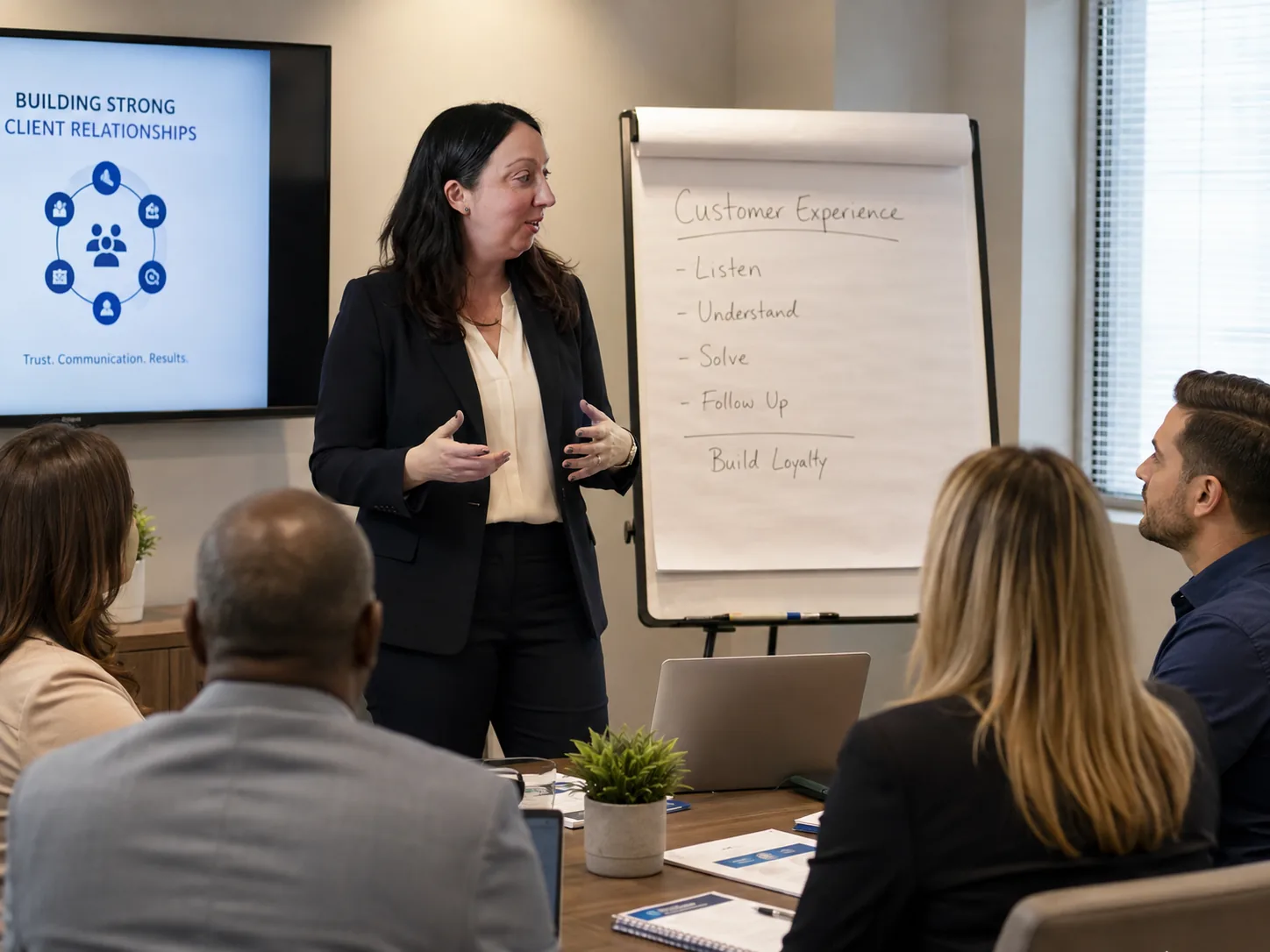
Larisa has been a member of the National Property Management Association for more than ten years. She holds the following certifications:
- CPPACertified Professional Property Administrator, National Property Management Association, current through 2027
- CPPMCandidate, Certified Professional Property Manager, examination scheduled September 2026
- ISO 9001ISO 9001:2015 Overview and Internal Audit certified
- SSGBLean Six Sigma Green Belt
- ITARExport Control Administrator, F10.010, vetted August 2022
- ACTFLSuperior ratings, Russian (Native) and English
- ClearanceActive DOD Secret
She holds a Bachelor of Arts from Karshi State University, Uzbekistan, evaluated by Joseph Silny and Associates (NACES) as equivalent to a U.S. regionally accredited university degree.
Publishing
Larisa is a co-author of AI for Asset Accountability and Property Control (Sykesystem Publishing, October 2026), and the founder of Remishka Publishing, a separate imprint she operates focused on children’s activity books, keepsake journals, and bilingual Russian-English educational materials.
Where Don writes from the program management chair, Larisa writes from the property accountability lead’s: precise and audit-tested, unwilling to sign a record she cannot stand behind.
Working with Larisa
Larisa takes a separate slate of advisory engagements from Don’s practice, scoped to property, inventory, and asset accountability.
Government contracting. DCMA Property Management System Analysis readiness, FAR 52.245-1 and DFARS 252.242-7004 compliance, self-assessment program design, physical inventory planning, loss reporting and causative research, subcontractor property oversight, and disposition support.
Commercial. Fixed asset register reconciliation, master data integrity ahead of ERP or CMMS migration, cycle count and physical inventory programs, custody and transfer controls, retirement and disposal documentation, and audit evidence readiness.
Healthcare and institutional. Clinical asset registers and custody controls, cold-chain and controlled-substance accountability, campus device and lab equipment programs, and grant-funded asset documentation.
Language. Russian-English translation and interpretation, including technical and program documentation.
Engagements are inbound only and remote-first. Contact reaches Larisa directly.
Larisa lives and works in Clarksville, Tennessee.